
THIS POST IS JUST DAMAGE CONTROL
Reasons for crashing out are subjective. I’ve started writing about my commute, not out of interest, but because it’s slightly more productive than blinking at the ground while someone I vaguely knew in middle school sits next to me and I pretend not to exist.
My Monday at Metropark
So here I am, another Monday at Metropark Station at 7:20 AM. The screen tells me my train to New York Penn is only eight minutes late. Not terrible. Meanwhile, the app is running its own separate simulation, saying the train has departed from Metuchen and will arrive at 7:30. This is very fascinating because it is now 7:45, and I see nothing. No train. No movement. Just me standing in 20°F. Where did you depart? Astral plane?
The worst part? I usually take the 7:22 train to avoid this exact situation. I planned ahead. I did everything right. But apparently, planning is just a suggestion when it comes to NJ Transit.
AND IMAGINE THIS. I do my entire Sunday wind-down routine. Candles lit, skincare done, alarms set. I go to bed early, mentally preparing to seize the week. And then this is the first thing I encounter Monday morning.
Platform Panic
It never stops there. The delay always leads to the same chaotic nightmare. A million people crammed onto the platform, all waiting for a train that is clearly on its own personal journey of self-discovery. Since the 7:22 train isn’t showing up until 8, everyone who planned to take the 7:39 and 7:51 trains is also still here, hoping, dreaming, and praying that something, anything, arrives.
When a train finally decides to grace us with its presence, we all have to engage in a casual yet kind of personal battle to get on. No assigned seating. No logic. Just instincts. Subtly pushing, strategic foot placement, expertly timed side steps. It’s basically Survivor, except instead of a million dollars, you just get to sit down for 30 minutes.
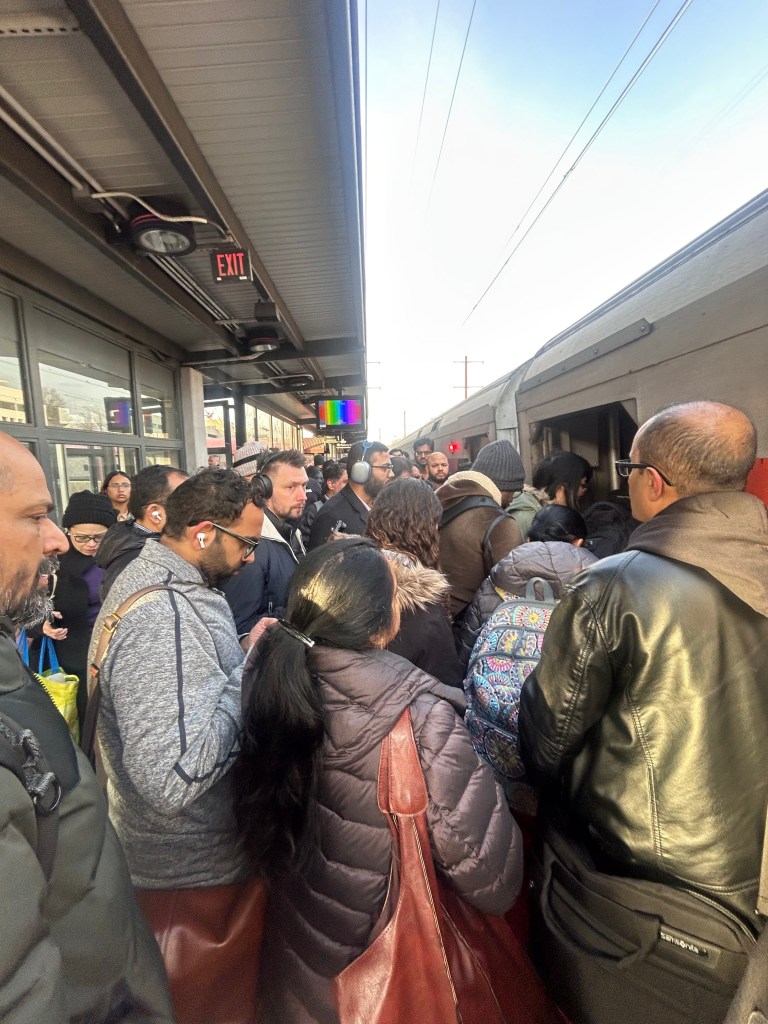
I had to stand
The Window is a Lie
After all this chaos, I’d love to just look out the window and zone out. But can I? No.
Instead of a view, we get a foggy, distorted blur. Naturally, I did assume it was just years of grime and sh*te, but it turns out it’s not. Years of acid rain, heat, and UV rays have fried the glass, making it permanently opaque.

It’s sometimes worse than this
People have been complaining since 2022. Now, after enough complaints and the CEO’s wife bringing it up during pillow talk, they’re speeding things up. Eighteen and a half million dollars to replace 13,000 windows by April 2028. So yeah, in just three short years, I might be able to stare out the window in peace. Progress.
PSA. After I wrote this, I started to notice that alot of the windows are actually clear now. Go you, NJ Transit. Trying to prove yourself out here. B+ for effort.
The Tunnel Trap
Finally getting on the train feels like a win, but it’s just the beginning of a much longer saga. This isn’t just a delay. It’s a gateway to a 20 minute standstill in a tunnel, effortlessly transforming my planned 8 AM arrival into a less convenient 9 AM. To make things even better, I then face a 30 minute walk, since First Avenue is a subway desert. By the time I finally roll into work, I’m late, slightly out of breath, and ready to say the same sentence. “I’m so sorry for being late, my train was incredibly delayed.”
Which, at this point, can I even use as an excuse anymore? No. It’s just expected. Train issues isn’t an explanation. It’s a monthly subscription service that I pay 400 dollars for with no option to cancel.
Now, with this all being said, it’s time for me to dissect why this is happening to us. Because I love Jersey, and I want answers. Also, to feel better and maybe give NJ Transit a little leniency.
THE VICIOUS CYCLE OF TRANSIT POLITICS
Let’s zoom out for a second because the real question isn’t just “why is my train late?” It’s why does the system never get better?
Welcome to the public transit death spiral, brought to you by federal politics, state neglect, inter-agency gridlock, and short-term thinking.
Meanwhile, in Japan
FYI, I recently went to Japan, and their train system… A whole other level. The Shinkansen isn’t just a bullet train. It’s a metaphor for how a country values its people’s time. It’s smooth, quiet, and efficient. I was seriously fangirling over how intuitive everything was. From the boarding process to the digital signage to the fact that no one was yelling over a crackly speaker system.
That contrast stuck with me because the difference isn’t just in the trains themselves. It’s in the systems behind them. The more I thought about it, the more I realized. What felt like a difference in atmosphere was really a difference in priorities, policy, and long term investment.

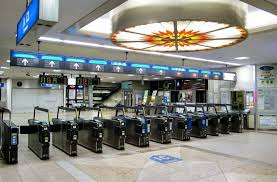
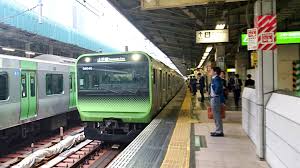
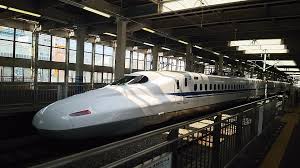

HERE’S HOW IT WORKS:
#1 Public Transit in America Was Never Meant to Thrive Unlike Europe or Japan, where mass transit is seen as a critical national service, the U.S. treats public transit like a local afterthought. Funding is fragmented: federal money mostly goes toward highways and air travel, and rail infrastructure gets crumbs.
According to the Bipartisan Policy Center, just 20% of federal transportation funding goes to public transit. The rest? Roads. So even though the Northeast Corridor Rail Line (NEC) is one of the busiest transit corridors in the entire country (accounting for 20% of U.S. GDP and 800,000 daily riders), it’s still treated like a side quest. That’s mistake number one.
#2 Amtrak Is Caught in the Middle
Amtrak, which owns the infrastructure NJ Transit depends on, is a federally chartered corporation but not fully funded.
Every year, Amtrak has to beg Congress for money, and its funding gets turned into a partisan issue. David Ditch from The Heritage Foundation went as far as to call Amtrak subsidies a great train robbery that should be derailed. Because apparently, deciding whether or not to maintain the busiest rail corridor in the country is still up for debate.
In fiscal year 2023, Amtrak reported a net operating loss of 757 million dollars. While there are efforts to modernize (hi airo train), delays in congressional appropriations leave those efforts perpetually half finished. With support arriving in sporadic bursts, maintenance is deferred, upgrades are shelved, and planning becomes less strategic vision and more triage. Infrastructure continues to decline, and NJ Transit riders are the ones waiting. In the cold and dark. Literally.
The Private Sector Solution We DIDN’T Ask For
On January 15, 2025, political commentator and former congressman Sean Duffy made headlines when he said on national television that federal investment in systems like NJ Transit should be reevaluated. He argued that private sector alternatives could do a better job and questioned whether continued spending on underperforming, high-cost corridors is worth the taxpayer burden. Which is bold, given the private sector’s habit of solving public problems by monetizing them and then offering monthly subscriptions to the solution. Watch the new Black Mirror episode Common People, and you’ll get it.
In theory, it does sound promising.
Private companies could be contracted to operate trains on publicly owned tracks. They might be brought in to build and maintain new lines through something called a public-private partnership, which is essentially the government asking for help without admitting it. And in the boldest version, companies could own and run entire transit systems independently. Trains, schedules, maintenance, all of it. It’s transit, but make it corporate.
In practice, it becomes more complicated.
The kind of complicated where no one’s entirely sure who’s responsible for anything, but the delays still happen anyway.
Operating trains still relies on public infrastructure, which means the same old bottlenecks, crumbling tracks, and electrical issues remain. Building new lines costs a ridiculous amount of money. Private firms are totally down for it as long as taxpayers play sugar daddy. bffr, they’re not picking up that tab. And the fully private systems, like Brightline in Florida, tend to serve profitable regions and politely ignore the rest. The rest meaning lower-income and rural regions.
Now the only reason Japan’s privatized system works is because it still gets public support, serves densely packed cities, and casually owns half the real estate near its stations. It’s a self-sustaining ecosystem. Trying to replicate that in the U.S., especially in New Jersey where the infrastructure predates penicillin and is held together by budget hearings and prayer, feels more like fan fiction than policy.
So while the idea of privatization sounds bold, in reality, it often just means shifting public risk to private profit, with no guarantee of better outcomes unless it’s done carefully, with public interest at the center.
And guess who absorbs that uncertainty if it’s not? Us.
#3 The Infrastructure Is Failing If you think your train is slow, just wait until you hear about the tracks and tunnels it runs on. NJ Transit isn’t just dealing with delays, it’s dealing with a rail system that’s well over a century old, severely overburdened, and actively breaking down.
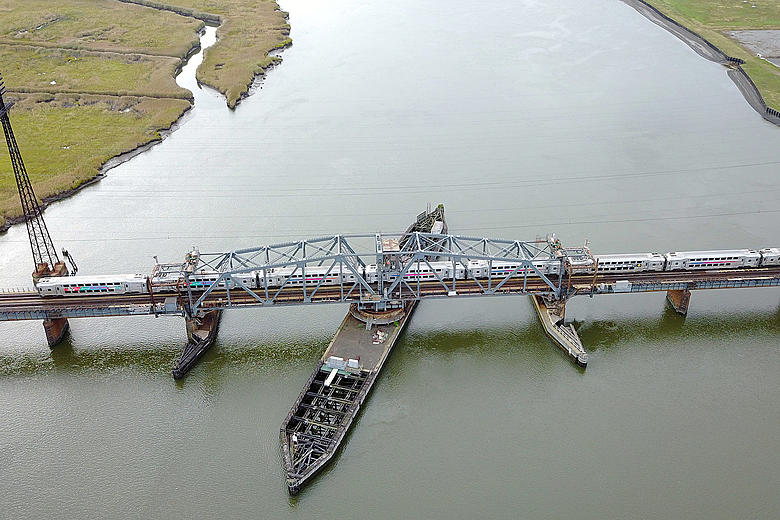
Portal Bridge: The Swing Bridge That’s Swinging Too Much
Let’s talk about Portal Bridge, a crucial part of the Northeast Corridor that should have retired decades ago. Built in 1910, this swing bridge spans the Hackensack River and was designed in an era when cars barely existed. Today, it remains one of the biggest choke points for NJ Transit and Amtrak.
Why? Because it has to open for boats passing underneath. And every time it swings open, it doesn’t always swing back into place correctly. When that happens, train traffic completely stops until maintenance crews can manually realign the rails. If you’ve ever been stuck for no apparent reason outside Secaucus, congratulations, you were probably waiting for a bridge to fix itself.
This also isn’t a rare occurrence…it happens several times a year, causing massive delays for NJ Transit and Amtrak trains. Engineers have long acknowledged that this bridge is past its lifespan, but since it’s such a critical piece of the rail system, replacing it is a logistical nightmare.

Hudson River Tunnels: The Two-Track Disaster
If Portal Bridge is the first boss battle, then the Hudson River Tunnels are the final boss of NJ Transit’s struggles.
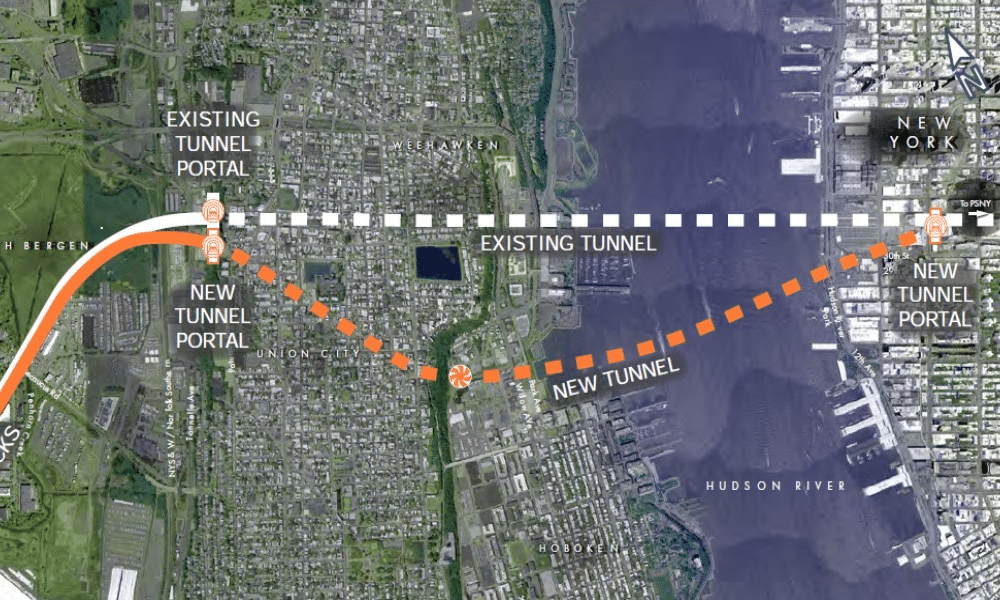
These tunnels were built in 1910 and remain the only two tracks connecting NJ Transit and Amtrak to New York Penn Station. Every single NJ Transit train into Manhattan has to go through these tunnels. That’s 450+ trains per day, running through a structure that was designed before commercial airplanes even existed.
Then, Hurricane Sandy happened.
In 2012, storm surge from Sandy flooded both tunnels with saltwater. The tunnels were never designed to handle this kind of exposure, and as a result, they’ve been slowly corroding ever since.
Mr. Downtown_Pete, a random Gothamist commenter, really put things into perspective for me. He compared the tunnels to a clogged artery on the verge of a heart attack, and honestly? He’s not wrong. If this were an actual patient, we’d be doing an emergency bypass, not waiting around to see what happens. Instead, we’re trusting Amtrak, which operates on a budget that screams “surviving, not thriving,” to keep it together.


The Plan Exists. 2025 Isn’t in It
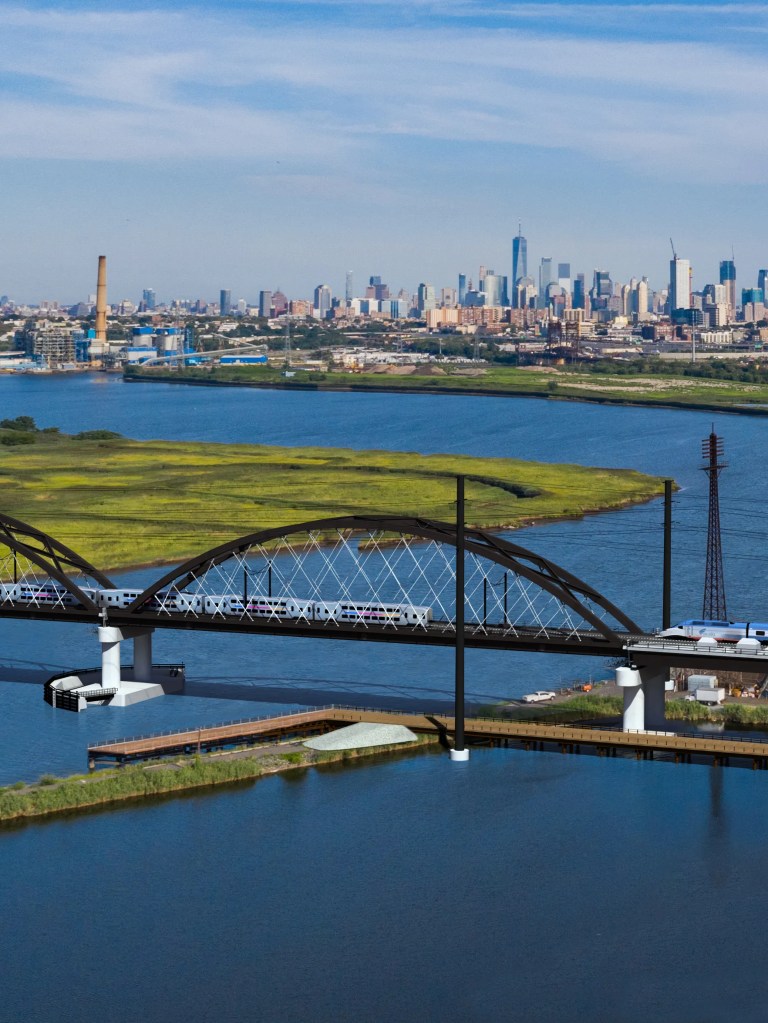
The Gateway Project, which includes the Hudson Tunnel Project and Portal North Bridge replacement, is meant to double rail capacity and finally allow real repairs on the existing tunnels. Construction started in 2023, but the full project won’t be done until 2035, meaning delays and emergency repairs aren’t going anywhere anytime soon.
So, 2025 isn’t the year of change, it’s another year of waiting and hoping nothing breaks.
#4 Riders Always Pay the Price And here’s the full circle: while agencies blame each other, we pay for it. With time, with stress, with money. Fare hikes roll in, service cuts happen, and upgrades are years away.
It’s a Cycle That Feeds Itself
- Broken infrastructure = delays
- Delays = frustrated commuters
- Frustrated commuters = louder complaints, but still high dependency
- High dependency = political complacency
- Complacency = inconsistent or minimal funding
- Minimal funding = more broken infrastructure
PENNSTATION to wherever in JERSEY
I do need to just quickly tell you about the type INSANE commute from NYC to Metropark, because that’s a whole separate ordeal.
You get to Penn, scan the departure board, and what do you see? “Standby.” “Standby.” “Track TBD.” You and 600 other desperate souls are locked in a silent standoff, eyes switiching between your phones and the screen. You can’t even wear AirPods, because sometimes the track number slips into the announcement before it appears on the board, and that tiny head start might be the only thing between you and a seat.


Then, FINALLY, the screen lights up: “Track 14.” Everyone starts sprinting. And of course, Track 14 isn’t even in the normal part of the station. It’s in its own separate section basically a punishment for people who dared to commute during rush hour.
Tip for all of you: go through the Amtrak side of Penn Station. It’s less crowded. Or, post up near tracks 8-9 so you’re in striking distance of both Track 1 and Track 14. Tactical maneuver.
THE END
I’m concluding this because I’m tired of researching. I thought I’d be satisfied once I found answers. Spoiler: I feel worse. This wasn’t an investigation. It was just me falling down a rabbit hole of PDFs, policy jargon, and a generous serving of misplaced hope 🙂
So let me just wrap this up by saying, I hope you got something out of this. I’m officially retiring my NJ Transit slander (well, some of it) because, at the end of the day, I kind of get it. Idk man maybe I mess with the collective experience of the ride. A fogged-up window. A barely-there announcement. A platform full of half-awake optimists. A system running on duct tape, grant proposals, and collective delusion.
Because truly even though we complain, we somehow keep showing up. Late. Tired. Entirely unsurprised.
Until real investment happens, NJ Transit will remain the gold standard of public inconvenience. Every morning commute is a gamble, an endurance challenge, and an unpaid clinical trial in psychological resilience.
Last Stop, I’m Out
I’m leaving soon though LOL. The daily commute will be missed. Not by me, but maybe by someone studying collective suffering.
No more waiting at Metropark, studying the metaphysics of delayed arrivals. No more playing Track 1 or Track 14 roulette, a game designed by Kafka and edited by NJ Transit middle management. I’ve done the time. I’m expecting a commemorative plaque.
To those still out there: may your train arrive, may your outlet work, and may your spirit not be broken by a 23-minute “residual delay.”
We ride at dawn…figuratively. I’ll be sleeping in.
 Akolia's Avenue
Leave a comment